
n the last four years, Indian student leader Umar Khalid has moved his application for bail over a dozen times. Shunted from the low Delhi courts all the way up to the Supreme Court, he has been hit repeatedly with delayed hearings or outright denial of bail, leaving him indefinitely behind bars.
Khalid was arrested in September 2020 over allegations of being part of a “larger conspiracy” to ignite deadly riots in the capital city New Delhi, which resulted in the deaths of over fifty people, most of them Muslims lynched in the streets by Hindu mobs. Saddled with charges ranging from “promoting enmity” to “terrorism,” the police have used his public speeches as evidence to prove the charge of incitement.
A look at what he actually said makes these claims rather dubious. One such speech, delivered in Maharashtra in February 2020, urged people not to respond to violence with violence, or hate with hate. “If they spread hate, we will respond to it by spreading love. If they beat us with lathis (police truncheons), we will hold aloft the tricolor (Indian flag). If they fire bullets, then we will hold the Constitution and raise our hands. . . . But we will not let you destroy our country,” he told the crowd, calling on his fellow Indians to peacefully protest the Citizenship Amendment Act (CAA), a discriminatory law that experts fear could be weaponized to strip millions of Muslim Indians of their citizenship.
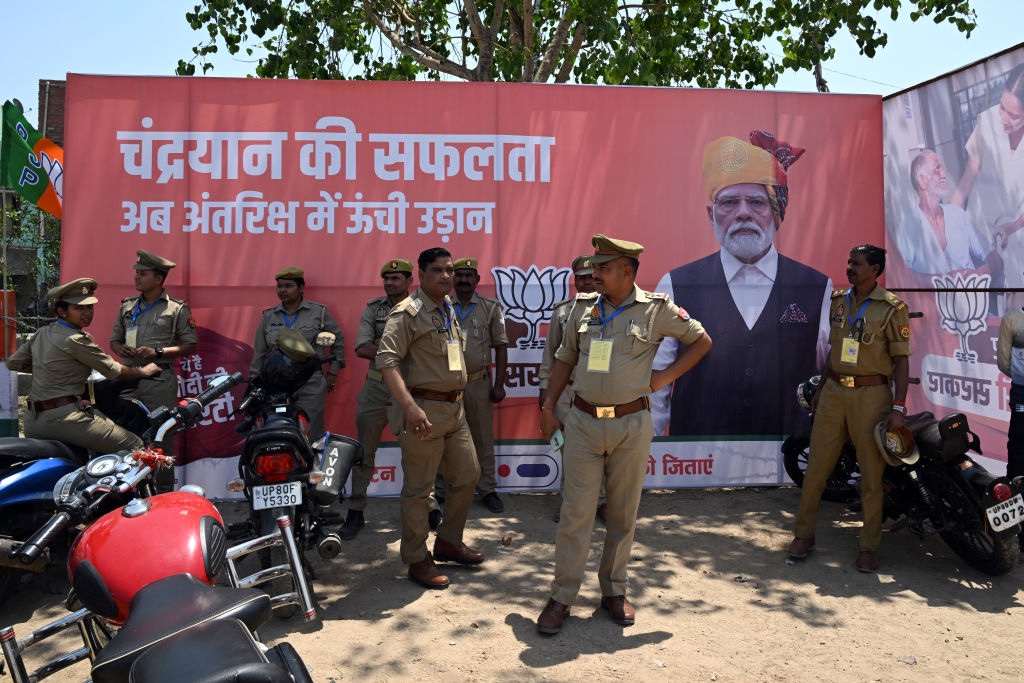
But in the eyes of Prime Minister Narendra Modi’s Bharatiya Janata Party (BJP) government, it was a seditious speech. The only fitting consequence was turn Khalid into an example for other protesters.
But Khalid isn’t the only prisoner of conscience in Modi’s India. There are hundreds of people like him, locked behind bars as political prisoners. In the ten years since Modi came to power, he has decimated Indian democracy by punishing journalists, members of civil society, activists, students, and lawyers for criticizing him, his government, and his Hindu supremacist ideology.
Fact-checking government propaganda, reporting on a story that reveals the suffering of minorities, attempting to secure justice for victims of Hindu nationalist violence or state brutality: all of these acts can land a person in jail on terrorism charges, with scant chances of a fair trial and bail.